We get asked “what lights do I need?” at least once a week. The honest answer: it depends on your venue, your ceiling height, whether you have power where you need it, and what you’re actually trying to achieve.
This guide breaks down the main fixture types so you can have a real conversation with your AV company — or DIY with more confidence.
Moving Head Lights
Moving heads are the fixtures you see at concerts sweeping across the crowd. They pan, tilt, change colors, and can be programmed to sync with music. They’re impressive, but they’re also heavier, more expensive, and need proper mounting.
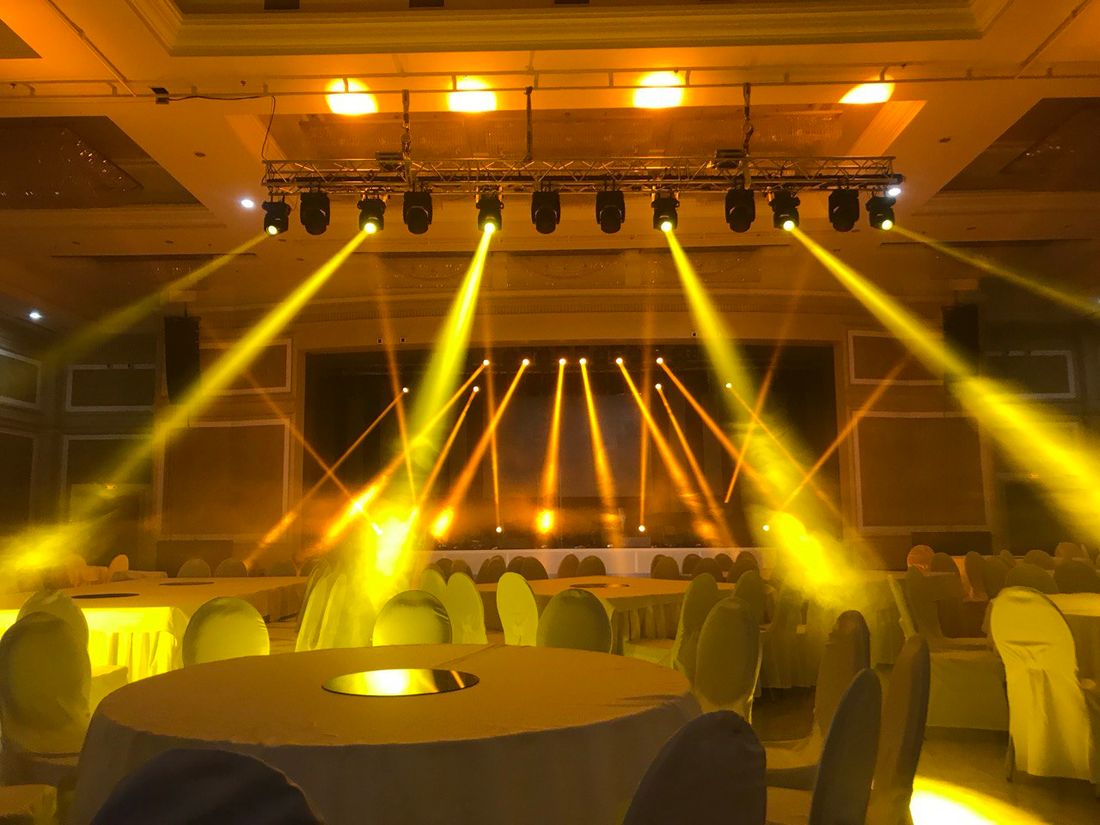
Here’s what actually matters when choosing between the four types:
Beam Lights
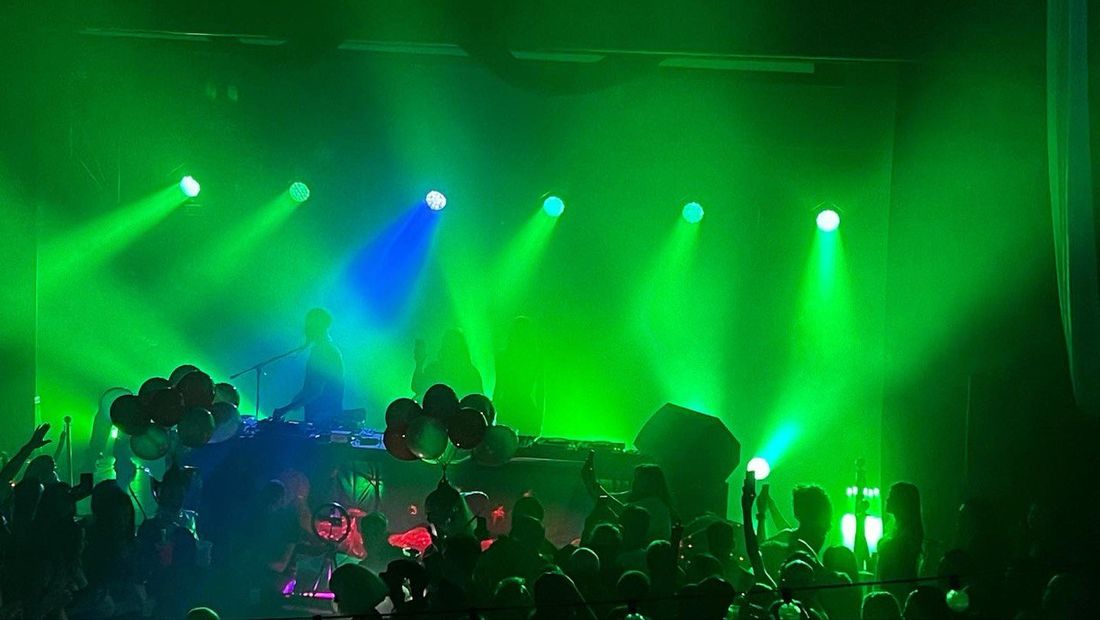
These shoot tight, laser-like columns of light. They look incredible in photos and videos, but here’s what nobody tells you:
- You need haze. Without something in the air, you won’t see the beams at all. Just light on the ceiling.
- They don’t light anything up. Beams are for visual effect only — your stage will still be dark.
- Ceiling height matters. In a room with 10ft ceilings, beams look cramped. They really shine (literally) with 20ft+ ceilings.
- Great for: concerts, DJ sets, galas with high ceilings, dramatic entrances
Spot Lights
Spots give you a focused circle of light you can point at someone or something. Many have gobos — metal cutouts that project patterns like stars, breakup textures, or your logo.
- Actually lights up what you point at (unlike beams)
- Gobo projection works best on flat surfaces close to the fixture
- Sharp edges look great on camera
- Great for: keynote speakers, award presentations, first dances, product reveals
Wash Lights
Washes are your workhorses. They flood an area with soft, even light. Every professional stage setup uses them because they make everything look balanced and polished.
- Cover the stage so performers aren’t in the dark
- Blend colors smoothly (good for matching brand colors)
- Less “wow factor” than beams or spots, but essential
- Great for: any stage, any event — these should be your baseline
Uplighting
Uplights sit on the floor and wash color up the walls. Simple concept, big impact. A bare banquet hall goes from “conference room” to “designed event” in about 20 minutes of setup.
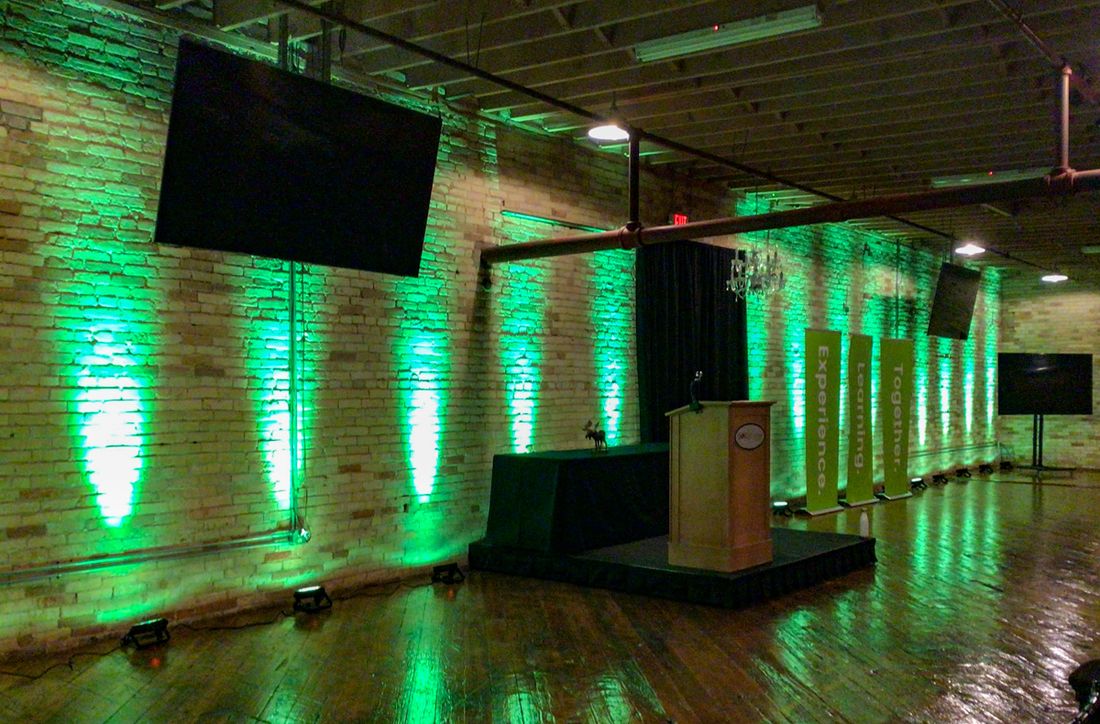
What you should know:
- Battery vs. wired: Battery units are easier to place (no cables to hide), but cheaper wired units are just as bright. Battery matters most when you have no wall outlets nearby.
- How many? Rough rule: one uplight every 8-10 feet along walls you want lit. A typical ballroom uses 12-20 units.
- White walls look best. Colored walls absorb light and shift the color unpredictably.
- Place them behind furniture/plants when possible — guests don’t need to see the fixtures themselves.
Haze vs Fog
This is the part people forget until they set up their beams and realize they can’t see them. Light needs particles in the air to become visible.
Haze
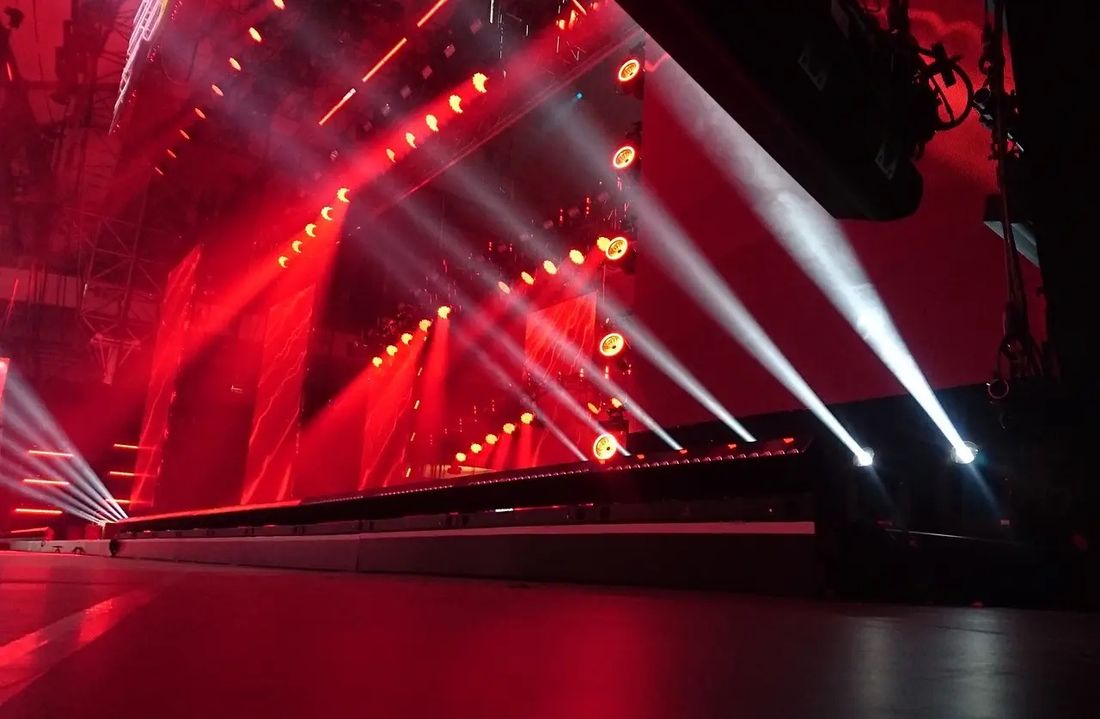
Haze is a fine, even mist that hangs in the air. You barely notice it’s there until you turn on the lights — then suddenly every beam is visible.
- Runs continuously throughout the event
- Doesn’t look “smoky” to guests
- Takes 10-15 minutes to fill a room properly
- Watch out: Fire alarms. Many venues need you to notify building management or cover nearby smoke detectors. Ask before you run it.
Fog
Fog is the thick white clouds rolling across the floor for a first dance, or bursting out during a performer’s entrance. Very visible, very dramatic, dissipates quickly.
- Use it for moments, not continuously
- Low-lying fog (dry ice or cryo) hugs the floor
- Regular fog rises and can obscure sightlines if overdone
- Watch out: Same fire alarm issues, plus slippery floors with some fluid types
Quick comparison:
| Haze | Fog | |
|---|---|---|
| Look | Invisible until lit | Visible clouds |
| Duration | Hangs for hours | Dissipates in seconds |
| Purpose | Make beams visible | Dramatic effect |
| Fire alarm risk | Lower | Higher |
Special Effects (Strobes, Lasers, Blinders)
FX fixtures are for peak moments — the beat drop, the grand entrance, the countdown to midnight. They’re not on all the time.
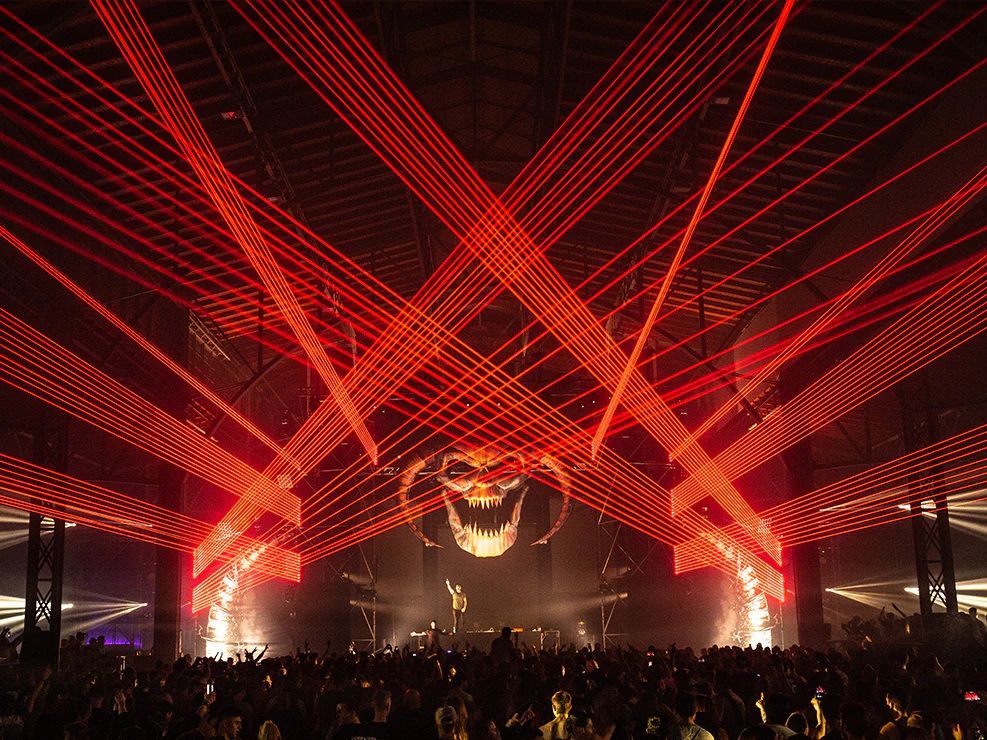
- Strobes: Rapid flashing. High energy, but can trigger seizures in photosensitive people — always warn your audience at events with heavy strobe use.
- Lasers: Look incredible, require trained operators and proper safety measures. Not something to DIY.
- Blinders: Bright audience-facing lights that create “wall of light” moments. Used sparingly.
What Do You Actually Need?
Here’s a practical starting point based on what we typically set up:
| Event | Start with | Add if budget allows |
|---|---|---|
| Intimate wedding (under 100) | 10-12 uplights | Pin spots for centerpieces |
| Wedding reception (100-200) | Uplights + DJ lighting package | Moving heads for dance floor |
| Corporate gala | Uplights, stage wash, 2-4 movers | Haze, gobo projection |
| Concert/DJ night | Moving heads, haze, wash | Strobes, lasers |
| Large production | Full rig designed for venue | Everything |
Keep in mind:
- Power requirements add up fast. Know your venue’s circuits before loading in.
- Setup takes longer than you think. Moving heads need programming time.
- Venue restrictions matter. Some places ban haze, open flames, or lasers entirely.
Real Talk
The best lighting setup is the one that matches your venue and goals — not the one with the most fixtures. We’ve seen 6 well-placed uplights outperform 30 random lights thrown at a room.
Tell us what you’re working with (venue, date, vibe you want) and we’ll tell you what actually makes sense.