Corporate Gala Production: Stage, Screens, Lighting & IMAG
We’ve done production for galas at the Metro Toronto Convention Centre, Liberty Grand, Fairmont Royal York, and dozens of corporate ballrooms across the GTA. The pattern is always the same: from the audience, these events look effortless. Behind the scenes? Every detail matters.
A weak stage setup, bad audio, or screen that’s too small can make a $100K event feel cheap. We’ve walked into venues where the in-house AV team had everything underpowered, and watched organizers panic two hours before doors.
This guide is what we wish every client read before their first call with us.
Figure Out the Vibe First
Don’t start with equipment. Start with questions.
What kind of event is this? Black-tie formal with 400 executives, or a tech company celebrating their team with 150 people? Are there 20 award categories or 5? Is there a dance party after, or do people leave after dessert?
These answers shape everything—stage size, screen choice, lighting intensity, audio coverage.
We’ve seen clients overload stages with too much gear because they thought “more = better.” It doesn’t. A clean, intentional setup beats a cluttered one every time.
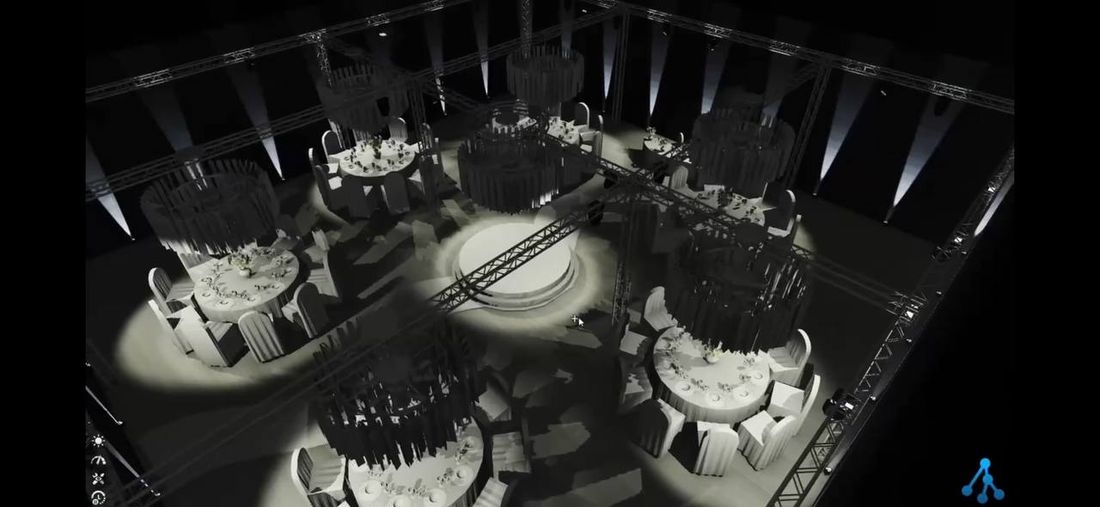
Print Backdrop vs LED Wall
This is usually the first big decision.
Print backdrops are fine for smaller events. One sponsor logo, clean design, done. They photograph well and there’s nothing to break. Cost is lower, setup is faster.
LED walls are different. You get motion graphics, sponsor rotations throughout the night, live camera feeds of presenters (IMAG), and the ability to completely change the mood between dinner and dancing.
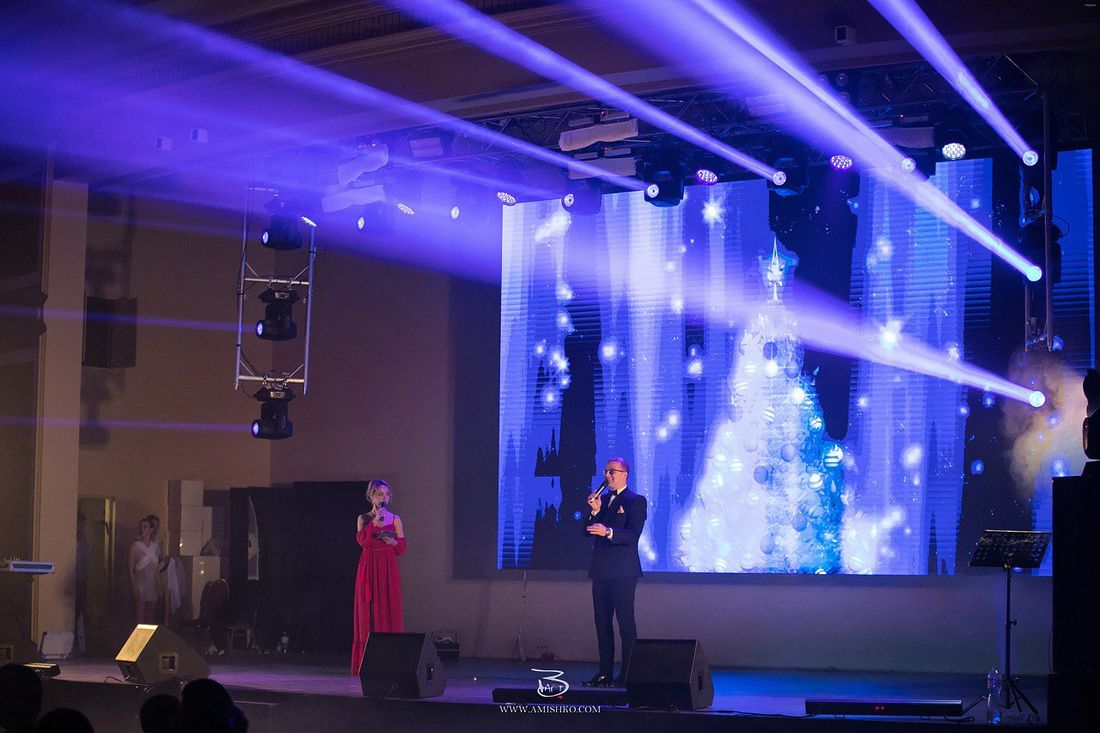
Here’s the thing though—LED only looks good if the content is good. Stretched logos and PowerPoint slides on a $30K LED wall? That’s worse than a well-designed print backdrop.
If you’re doing LED, budget for proper motion graphics. And make sure someone competent is running playback.
Quick decision guide:
- Single sponsor, simple event → print
- Multiple sponsors, IMAG, high-profile → LED
- Tight budget but want flexibility → rent a smaller LED center section with print wings
Lighting for Corporate Galas
This isn’t a concert. Gala lighting needs to be controlled, flattering, and smart.
Dinner service: Warm wash on stage, soft table ambience, nothing too bright. People are eating and talking. The room should feel comfortable.
Speeches and awards: Stage gets brighter, podium lit evenly (no weird shadows on faces), presenter walk-up cues. Photographers need clean light to work with.
After-party: If there’s dancing, this is when moving heads activate, colors shift, and the energy picks up.
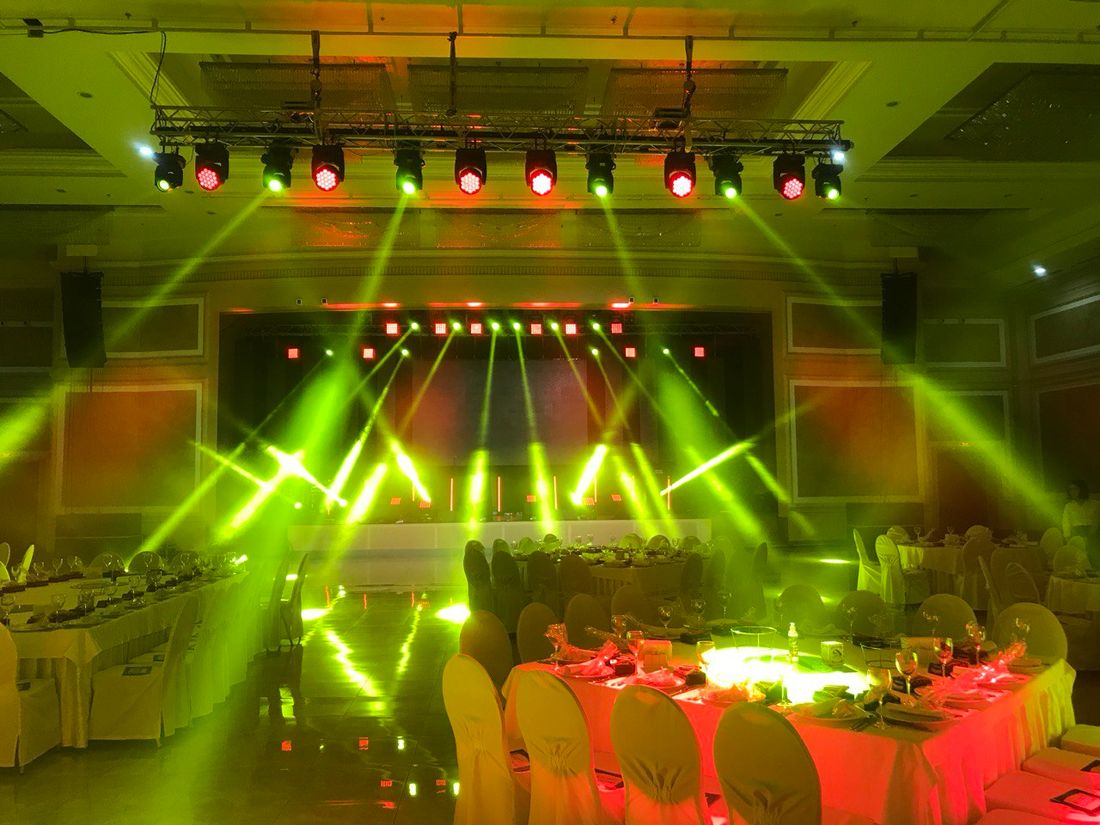
The mistake we see most often? Lighting that’s too aggressive during speeches. Moving head beams flying around while the CEO is talking—that’s a club, not a corporate gala.
Audio: The One Thing You Can’t Fake
Bad audio kills an event faster than anything else.
If guests at table 40 can’t hear the acceptance speech, the night is ruined for them. Doesn’t matter how nice the stage looks.
What we check:
- Speaker coverage across the full room (not just the front)
- Wireless mic redundancy (always have backups)
- Feedback control for reflective ballrooms
- Clear monitor mix for presenters
Hotel in-house systems are often underpowered for 300+ guests. We bring our own rigs when the room demands it.
IMAG: Live Camera for Large Rooms
If you’ve got more than 200 people, the back tables can’t see faces on stage. IMAG (Image Magnification) fixes that.
Live camera feeds go to side screens or the main LED wall. When an award winner walks up, they’re visible to everyone—not just the front row.
What a proper IMAG setup includes:
- 1–3 cameras (depends on room size)
- Switcher with live operator
- Lower-third graphics for winner names
- Recording for post-event content
This also makes sponsors happy—every camera shot shows the branded backdrop.
Sponsor Integration (Without Making It Feel Like an Ad)
Corporate galas are often sponsor-funded. Production needs to support that.
But there’s a line. Oversized logos everywhere, constant sponsor mentions, aggressive branding—it cheapens the experience.
What works better:
- Subtle sponsor loops between segments
- Animated logo transitions (not static slides)
- Branded podium and step-and-repeat at entrance
- Lighting that matches sponsor colors
The goal is visibility without making guests feel like they’re sitting in a commercial.
Show Flow: Timing Is Everything
Equipment is only half the job. The other half is execution.
Award shows need coordinated cues:
- Walk-up music starts → lights shift → presenter hits their mark
- Winner announced → graphic appears → camera switches
- Speech ends → applause → transition to next segment
Without a rehearsed show flow, you get awkward pauses, missed cues, and a room that feels unprofessional.
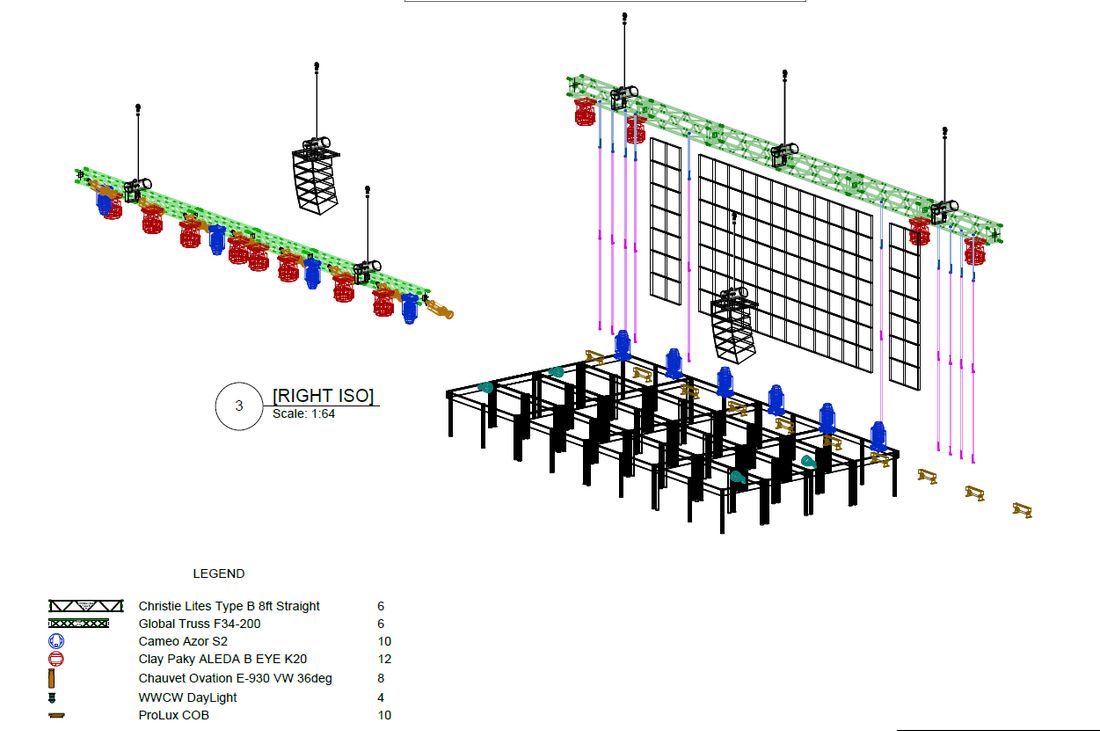
Always budget rehearsal time. Even 90 minutes makes a difference.
Mistakes We See Too Often
- Stage too small — three presenters squeezed together looks bad
- Screen too low — back tables staring at heads instead of content
- No rehearsal — cues get missed, timing falls apart
- Hotel AV without checking specs — often not enough for the room
- Ignoring ceiling height — can’t rig moving heads in an 8-foot space
Budget Tiers: What You Actually Get
| Tier | What’s Included |
|---|---|
| Basic | Stage deck, print backdrop, wash lighting, standard sound, podium mic |
| Mid-Level | LED backdrop, accent lighting, basic IMAG (1 camera), branded transitions |
| Full Production | Large LED wall, multi-cam IMAG, programmed lighting, show caller, live streaming |
Know your budget before the first meeting. It shapes every decision.
The Final Result
When everything clicks—stage proportions, lighting balance, clean audio, smooth show flow—you get this:
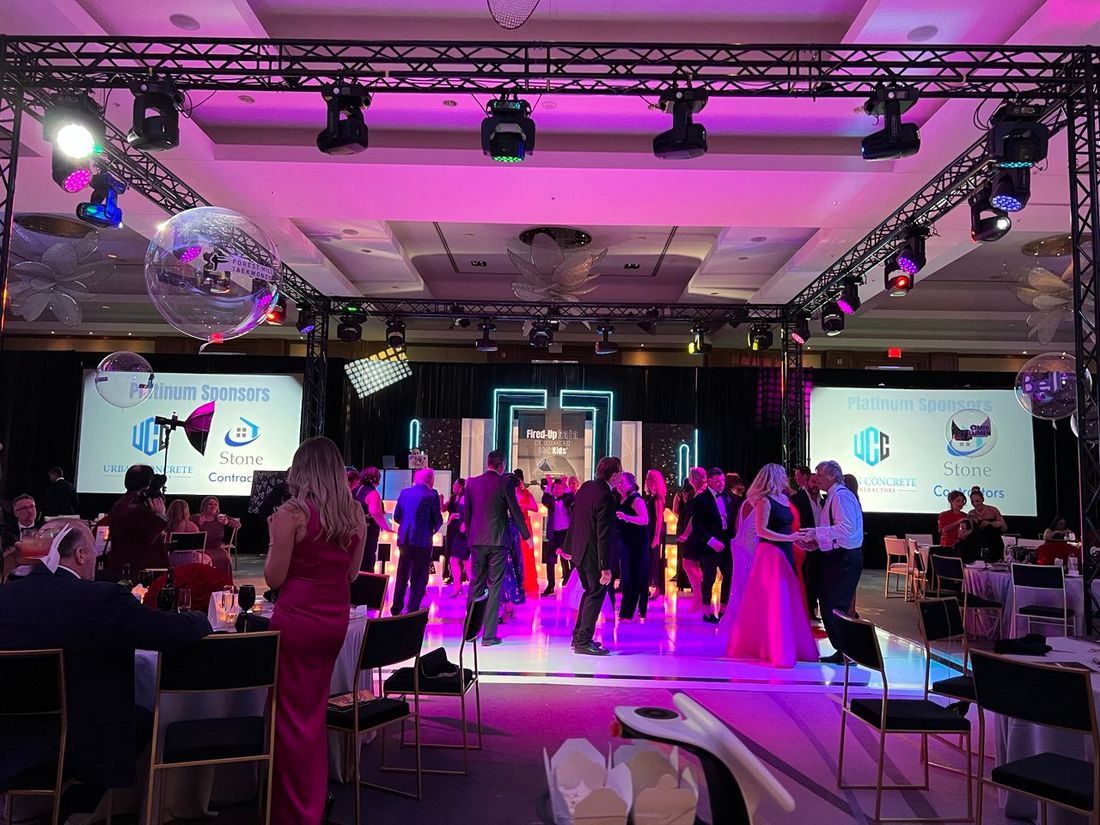
Guests remember how the night felt, not the specs. That’s what good production does.
Planning a Gala in Toronto?
Send us:
- Venue name and room dimensions
- Guest count
- Number of award categories / speakers
- Sponsor requirements
- Budget range
- Whether you need IMAG or streaming
We’ll put together a production plan that fits.